Brigid and hope

I’ve always loved the story about how God sent the rainbow as a message to humanity that He’d never again send a flood. Mind you, in Ireland, we have tested the “40 days and 40 nights” thing to it’s limit. Like to “40days and 39.5 nights” type thing. Be that as it may, I’ve always associated the rainbow with hope. But I don’t often see Brigid being related to hope.

A picture of an Irish roadway in the rain, with a green tree on the left hand side and bare trees on the other. A red bus is coming towards the front of the picture and in the background is a watery looking rainbow. Always a sign of hope to me!
An Irish roadway, with a red bus facing the viewer and a watery rainbow in the background.

I know, I keep going down rabbit holes with Brigid and associating her with different things, but really, truly, I mean this. Now, I’m not talking about the annual listing of Brigid as a “Spring Maiden Goddess” – there are associations with Brigid and spring, in both Ireland and Scotland, but the whole yellow, cheerful, sun associations I’m less keen on.

But, hope, now, I do link to herself. It became clear to me a few years ago, when I was taking part in a shadow work group. All around the group, women were saying “I can’t…” as if that put a stop to it. As if “I can’t” indicates a position that meant it could never be changed. And it’s not the case for me – mainly because of work. As an engineer, pretty much anything is possible, given enough resources. And by resources, I usually mean time and money! When I said this in that group, there was incredulity. Because what came out then was that people assumed things weren’t available for them to do whatever it was that they were claiming they couldn’t.

I took the notion that with the right resources, anything is possible, as a sign of hope. They took it as further proof the thing couldn’t be done, because obviously the resources weren’t available. For me, it’s hope. This came up again during my impromptu shadow work sessions a few weeks ago. Brigid asked me to do certain things and my response was “I can’t”. What I meant was “Are you fucking joking right now? Can you not see what I’m doing here?” And her response was “What resources do you need to do this?”

From previous experience, I knew not to say that I needed time. I did point out the conditions required for me to achieve what I was being asked to do. And I felt the hope rising. Because, at her heart, Brigid is an engineer – I firmly believe this! (Although I should note, is it UPG. As in there is no mentioned of engineers in any of the lore regarding Brigid. In saying that, the word engineer only came about in 1325. The lore is based on oral traditions going back well before then, so…)

But seeing a bad situation as a temporary thing, only continuing until certain conditions are met, is a hopeful way of looking at things, in my opinion. Now, we also have to work towards those conditions being met of course. The good old engineering approach of getting your hands dirty!

But in other ways, I find Brigid hopeful. I associate her with childbirth – an incredibly hopeful time. Her connection with grieving – ok, not hopeful in and of itself, but the notion that life goes on, even with grieving, is hopeful. Her work with healing and poetry and social justice – all give me hope. All ways in which there is light at the end of tunnel for us poor humans. Brigid works hard with us, to ensure we have the ways, the means and the resources to work out our issues.

Even when you look at the big things: the environment, poverty, homelessness, hunger. We have the means to solve these issues. It would mean certain people giving up wealth and status, maybe, but still possible. Have you ever heard of golden rice? This product solves a lot of food related issues in deprived parts of the world. It doesn’t suit many large corporations to have people growing it though. That led to a lot of publicity about the horrors of genetic engineering. Humans have been engineering food for millennia. Do you know what an original banana looked like?

A picture of a wild banana, cut in two, showing heavily seeded interior
A picture of a wild banana, cut in two, showing a heavily seeded interior

Genetic engineering didn’t start in the 20th century. As humans, we have been at it for pretty much all of our existence. If you don’t believe me – go check out a google on ancient cattle, horses. Hell, go look at the types of horses medieval knights were riding.

But back to Brigid. And hope. She’s not going to solve our problems for us. That’s not what any of the Irish deities are about really. They’re big on giving you the tools to do the job yourself, most of the time. But. Brigid will help. She will coach and assist. You can reach out to her and ask for help. Why would we work with her otherwise?
Liminality and Brigid

Brigid, or St. Brigid, is closely associated with liminality. But often, we don’t really think about what “liminality” actually means. So ,today, I’m going to explore the concept a bit and why we link Brigid so closely with it. I’ll be looking at liminal space as well and how it affects us. And I will be looking at both Christian and pagan resources here, because even Brigid’s ability to permeate that boundary is an example of liminality!

What is liminality?

Well, when in doubt, check out the dictionary…

Liminality is a state of transition between one stage and the next, especially between major stages in one’s life or during a rite of passage.

The concept of liminality was first developed and is used most often in the science of anthropology (the study of human origins, behavior, and culture). In a general sense, liminality is an in-between period, typically marked by uncertainty.

dictionary.com

So we’re looking at a state of transition, a non-stable state, a time of change. These are always difficult. I think this is why people look to rituals and actions at these times of change. Look at the recent death of Queen Elizabeth II in the UK. There was an outpouring of public grief and mourning, there was an eruption of cancellations of all sorts of events. But there were also people calling for life to go on – because for many people, it had to! There was widespread speculation at this time about countries (ahem – former colonies) removing the British monarch as head of state or leaving the Commonwealth. To date, only Ireland (1948) and Zimbabwe (2003) have done both.

Charles III was head of state and monarch since the moment of his mother’s death. But the space between the woman’s death and her burial were a liminal space, a period of transition. Particularly when you think that for a great percentage of her subjects, she was the only monarch they had known.

Personal liminality

That’s at a country level. But liminality comes at a personal level as well. Changing jobs, moving home, the death of a loved one – these are all transitional spaces, major incidents in life. It’s interesting to note that there are all among the highest stressors in modern life as well. I know from my own experiences of family members passing away, the three days between the death and the burial can seem like a time apart. Brigid gave us the ability to keen and mourn our dead, but the Irish have many customs surrounding death. From the newer notices on rip.ie to the bottle of whiskey traditionally given to the volunteer grave diggers… There are traditions and expectations surrounding each element of the event.

And it can feel surreal in those times. On the one hand, you’re extremely busy for a lot of the time, trying contact people and make arrangements. On the other, you can find yourself at a loss at times, or staring into space, struggling to come to terms with the loss. It is an uncertain time, where the traditions and expectations can help ground and focus us and help us through the transition.

Liminal space

Liminal space then is another consideration.

a state or place characterized by being transitional or intermediate in some way: Motels are such liminal spaces—everyone there is either coming or going.

Informal. any location that is unsettling, uncanny, or dreamlike: The classroom when school is out for the summer is a liminal space.

dictionary.com

Did you know this is why we sometimes forget why we came into a room? Liminal space, transitions between one allocated space and the next, is a place of transition. It changes the way our brains work and focus on things.

Many means of initiation use this to great effect. The idea of being withdrawn from the world in a different environment. The sense of no longer being in this world. The thoughts of a mental or spiritual transition aided by such a withdrawal. I’ve experienced it myself and it worked. It brought about new ways of thinking and means to change parts of the way I do things.

A liminal space won’t do this all on its own of course, but liminality is one of the elements of a successful initiation.

Liminality and St. Brigid

Most of our associations with Brigid and liminality come from St. Brigid. She was born on a threshold (a definitely liminal space), as sunrise (liminal time of day), to a pagan father and a Christian mother (liminal family lineage). She was fed from a cow from the Otherworld (white with red ears), which is in itself a liminal space in many way.

But we have links to the liminal in the deity as well. Brigid’s associations with death in Caith Maigh Tuireadh would link her to that liminal time. Her acknowledgement as a healer would have her dealing with births and deaths and serious illness. A all transitions of a fairly major sort. Liminality again. Her work as a poet, a file, would have links to the Otherworld and magi. Not to mention physically moving through the liminal spaces between dwelling places. Her work as a smith has elements of creation and destruction, as well as the forge itself being a liminal space of transmutation and transformation.

And of course, as I mentioned before, we have the movement between the deity and the saint, the pagan and the Christian. Brigid is a being that is comfortable with these transitions and liminality in general.

Managing liminality

So, Brigid being associated with liminality and change is well documented. But we, as humans, don’t always deal well with change. Even when it is something we look forward to… There are reasons a new marriage or a new job are on the list of high stressors. They are times of uncertainty and change.

How do we deal with this then?

Well, as with death, it can help to have long standing traditions to help use through these times. Half the reasons most people follow traditional paths in marriage is that it removes the stress of decision making. Families in Ireland will use the same undertakers for generations, because they know how things are done in the family. The same with solicitors, banks and even tea bags!

We can actively seek liminal times, liminal spaces. Places where land, sea and sky meet, I would consider liminal. As we change from one state to another – children changing schools for example, or graduating from college. Dedicating yourself to a new deity, committing to a new course of spirituality… All liminal times, liminal spaces. But even when we break new ground for ourselves, we like to see what those who have gone before us have done. We look for rituals in books, online, to feel like we have a tradition of some sort to back us up. (Nothing wrong with any of this, by the way!! Traditional ways of doing things can help keep us safe!)

So tell me, how do you deal with liminality? Is it something you’ve grown more accustomed to? Has Brigid “encouraged” you in this area? Or indeed, has she taken you and shoved you on the anvil so hard you’re still confused when you emerged? (Some of us can be a bit slower on the uptake than others and she gets impatient…) Let me know!!

The joys of menstruation

I don’t often contemplate the joys of menstruation, indeed, most of the time if those words come out of my mouth, it’s in a very sarcastic or cynical way. I don’t really find joy in bleeding once a month (ish). But, no more than some of my work for Brigid doesn’t cause me joy either, it’s a necessary part of life for (and a lot of other people who happen to have a uterus). And it does form part of my spiritual life. Now I’ve done a class on this over at the Irish Pagan School, but that a few years ago now and things have developed a bit since then. Whether you call it a bleed, your period or menstruation, all phraseology is welcome here!

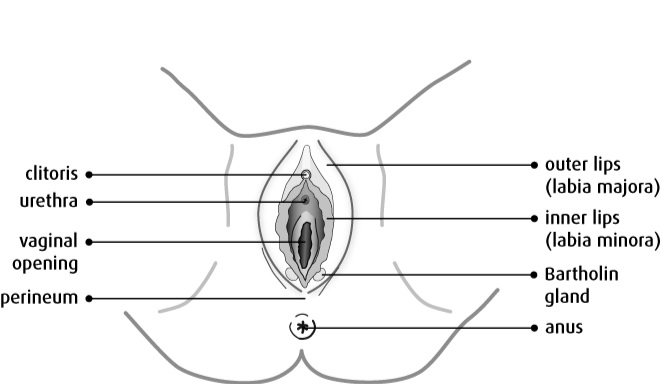
Image of lower part of the body showing vulva with different elements labelled

Well things have, of course changed slightly. I’m still shocked no one ever mentioned Bartholin glands to me, very important in engaging the vagina’s lubrication systems (Look I’m a mechanical engineer, it’s part of my job to get excited about lubrication!!) By engaging with reading and learning (like this course at DCU I’m doing right now) I’m learning ever more about my own body and in general about how bodies with uteruses (uterii?) work!

General practices

But of course the spiritual element also changes. And since we’re in the Imbolc season, I’m reviewing my spiritual practices in general. I’m considering how my menstruation practices work currently and if I need to adapt or change anything. Change occurs naturally over time, of course, like changing from a menstrual cup to period knickers has changed how I deal with my menstrual blood. I can add the rinse water from the knickers to the ground now rather than pure blood so to speak. It also changes how I look at my period. Aside form putting a different pair of knickers on during my period, outwardly, things remain pretty much the same.

Well, I say the same, but I do take things easier during my period these days. I can usually manage to either work from home (during the week) or rest on the couch (at weekends) on the first day, or sometimes the second day. My energy levels will be lower at this time and I can’t be running around like a March hare while I’m bleeding. I accept my reading tastes and food tastes and clothes tastes will all change. And that this is not the time to have difficult conversations in work, unless I need to be very very quiet during them! All that will be staying the same unless there is a very high need to change – like for example an important meeting that I can’t move or avoid during that menstruation time.

Spiritual practices

My spiritual practices around my period these days mostly involve around reflection and meditation, inner work that suits the mood my body is in. This sometimes leads to revelations about next steps in various things I’m working on, or a path forward. Sometimes, I’m giving myself space to disengage from a problem that’s bothering me, to return to it later with a fresh mind. Sometimes I get the equivalent of a nice hug or a slap upside the head from herself about various things. It varies.

Other spiritual practices around my period involve a sacred wash, whether bath or shower.

I need to be very clear here. I do not think having my period means I am unclean in any way.

Picture of a bath with candles, at water level, look at a pillar candles on a stand, 3 tea light in small holders, 2 amber, middle one is blue, a larger candle (pink) and a final candle holder that is blue, light reflected on the surface of the water, white bath, white tile background. Sinking into hot water during your period can really help relax the muscles, never mind anything else!
Picture of a bath with candles – not my bath!!
Bathing and indulgence

Nor is anyone else, for that matter. But as I shed my uterine lining, I think it’s important to consider what else I might want to shed as well. And a sacred wash helps with this. Now, this can be as simple as lighting a candle before getting into the shower and consciously and intentionally cleaning my body, my mind and my spirit. Or it can be a lovely luxurious bath with lots of candles and bubbles and bath bombs and all sorts. I sometimes use music to help clear out the energy, I sometimes don’t. I sometimes use herbs, I sometimes don’t. It’s important to me that the relinquishing of things I need to let go of and clear out falls in line with my energy levels and capabilities. Some months, menstruation is just harder than others.

I will indulge my body during this week as well. Some may say this isn’t a spiritual practice, but frankly, screw them! If I want chocolate – I’ll have it. If I want to lie on the floor in a yoga pose I like to call “flopping” – I will. If I want to sleep all day and all night and just not move – I will. If I want soft clothes and jammies and that sort of thing, then that’s all I’ll wear. Ok, some of this is limited to the weekend, but not all of it. This indulgence is part of what makes the inner work easier. I feel more in tune with my body and mind at this time.

Connection to Imbolc

Well, there is the old thing about Brigid and Imbolc being related to fertility. And our menstrual cycles are definitely related to fertility. When we were trying for a baby (we = the husband and myself here), I did some extra fertility work around this time. Trying to tie in with the season that’s in it, you understand. These days, the fertility work I do is more along the lines of prosperity rather than fertility specifically. I like to light the candles to acknowledge the day. Leave out something that represents the household’s prosperity to encourage things to grow in the coming year. You know the sort of thing I mean!

I still use my menstrual blood when I walk the bounds and grounds. Or at least, I do when the timings right. I believe there is power in blood, more so in menstrual blood. Period blood is the blood that starts off life, it has all the nourishment a growing fetus needs. I don’t particularly want to go creating a wound just to add blood to that ritual though. So, I take advantage of the period blood when it’s convenient and manage without when it’s not.

What if you don’t bleed?

When I talk about menstruation spirituality, for me it is centred around my blood. That, to me, is the most obvious sign of the practice. But not everyone bleeds. (Whether you have a uterus or not, I believe you can engage with menstruation spirituality. Just to be clear. And not all people with uteruses bleed either.) But you can follow the rising and falling energy of your body. You can honour your body’s needs over the course of a cycle. Some people follow the lunar cycle to make sure they are not overdoing. The dark moon is a great time for inner work, reflection, retreat.

You may find, whether you bleed or not, that actually, there are other cycles that influence your energy. Maybe you work on shift and that affects you more than anything else. Maybe you have children and their energy cycles have more of an effect on you. Solar energy might the energy you’re most attuned to.

Honestly, there are so many energy cycles in this world. And to a certain extent, we are all exposed to them differently. So, ultimately, you do you. You don’t really need me to tell you how to manage your energy. I can advise, and share things that help me. I can share how I use certain things as signals for certain types of work. But how you manage yourself, your energy is entirely up to you!

Imbolc/ St. Brigid’s Day/ Lá ‘le Bhríde

Here we are on the 1st February, Imbolc, if you’re using the calendar dates, Lá ‘le Bhríde, or Lá Fhéile Bhríde in Irish, St. Brigid’s Day for Catholics (and possibly other Christians?) Every year on 31st January, I get questions from people panicking about the minute details of how to do things properly in preparation for Imbolc/ Lá ‘le Bhríde so I’m going to answer them here. I’ve written before about my own practices on this day, so you can check them out here and here.

Why do we do a 4-armed cross, isn’t that Christian?

Well, yes, the 4-armed cross is Christian, so why would we be using it in a pagan Imbolc celebration? Fair questions. But the cross woven of rushes or straw comes from a story about the saint, where she converted a chieftain on his deathbed and wove a cross quickly from the rushes on the floor so he could die under the sign of the cross. And of course, in Ireland, any magic is a syncretic blend of Christian and pagan, we just don’t have the clear separation there is in other places. (I mean, Brigid herself is a great example of this!) There are other styles (see pic below from T. G. F. Paterson’s collection, shown in Harvet Home: The Last Sheaf, 1975), some of which use wood as well as more pliable materials.

PIcture from the book Harvest Home: The Last Sheaf (1975) showing a range of Brigid's crosses, lozenge shaped, the Connacht cross, 3 and 4 armed versions and more intricate versions.

Picture of crosses collected by T. G. F. Paterson, shown in Harvet Home: The Last Sheaf, 1975

So, across the country there are options to look at – I’ve also seen a five-armed cross, although aside from the weaving challenge, I’m not sure of the connection of 5 to Brigid. The 3 armed version I can see for the Smith, Healer and Poet… But this brings us to the next question:

What materials do I make my Brigid’s cross from?

There are many places in the world where either straw or rushes aren’t readily available. People worry that there is an inherent magical or spiritual property in using these materials. I don’t think so. I think my ancestors used straw or rushes because they were free, readily available and suitable for the purpose, especially at this time of year. Ireland around Imbolc/ Lá ‘le Bhríde/ St. Brigid’s Day is wet. Very wet. So if you live somewhere where you’re buried under 6 feet of snow right now, then maybe don’t go rooting for materials under all that.

Ideally, in my opinion, use natural materials that you can fold in two. Grasses are usually good, some herbs can work, leaves… If you can’t find natural materials, maybe because of the aforementioned 6 feet of snow or because you’re in an urban environment, then use something as close to natural as you can. Wool, paper, card… If it can fold in 2, you can make a Brigid’s cross out of it.

What do I do with last year’s cross?

Traditionally, people would leave last year’s cross either in place in the rafters, so you’d have years worth of crosses up in the thatch, or else they would burn it. Not everyone can burn things though, so burial would also work. If you can’t burn it and the ground is too hard at Imbolc/ Lá ‘le Bhríde/ St. Brigid’s Day for digging, composting is the next thing to try.

Prosperity magic – what does the “four corners” mean?

People are concerned that this might mean north, east, south, west or the literal four corners. I’ve always taken it as the four corners of the house, but I don’t see any problems with using NESW either. Whether it’s inside or outside I think will depend on your own circumstances. I mean, if you’re on the 5th floor of an apartment block, maybe don’t try outside. Just for safety reasons.

Also, take into account the smel. If you’re using something biodegradable that will end up smelly in the process, make sure they’re easily accessible! But for me, I’ve always imagined people taking them in on the morning of the 1st February (calendar date for Imbolc/ Lá ‘le Bhríde/ St. Brigid’s Day). And mixed in with a larger group to help encourage the magic spread through the family’s goods. So, if you’re using coins – put them into your wallet, purse or wherever you store said money. Or lodge a coin into your account. But let the blessed/magic coins touch your other money.

What can I use for my brat Bhríde?

Any bit of material really. Some people have beautiful embroidered clothes they use, others have bits of ribbon (ahem, me….) I’ve seen football scarves being used, teatowels, actual towels, blankets… If you have a piece of cloth that you can tie up outside. (I usually tie my ribbon to the inside handle of the door and leave it flapping in the breeze then. Ideally you’re leaving it tied to a bush or a growing thing, but not everyone has that option. I’ve known people to have it flapping from a car window because they were driving on the night in question.

How do I use my brat Bhríde?

Well, in some parts of the country, the brat Bhríde is used solely for headaches. In other parts of the country, it’s for anything. In certain parts of the country, it’s still considered an essential part of an athlete’s kit bag. People use them for any sprains or twists that might occur during training. Essentially, wrap the brat round the body part that’s hurting or injured and leave it there. Hence why we use a ribbon in this house, the brat is most often used for ankle problems!

So there you go: a few questions answered for those who celebrate the celestial Imbolc/ Lá ‘le Bhríde/ St. Brigid’s Day. If you’d like to know more, there are a few classes over at the Irish Pagan School to look at for Imbolc and for Brigid. And of course there’s my classes at the Brigid’s Forge school as well.

Imbolc Ritual and Brigid

As ye are probably aware, I am in month three of running the Preparation for Imbolc course. Last night, one of the students said they felt a pressure to have some grand gesture, important dedication, really fancy Imbolc Ritual, cos well… as a Brigid follower, shouldn’t we be making a special effort here? They also felt bad because the 1st February isn’t easy for them to do anything because it’s a work day. So, I thought I’d write a bit about this.

The date of to hold your Imbolc Ritual

We use 1st February as a short hand for the celebration of Imbolc. It ties in with 1st May for Bealtaine, 1st August for Lúnasa and 1st November for Samhain. Except… then we run into the idea that really, since the day began at sunset in Ireland, the festivals were the night before – certainly, it’s usually 31st January I’ll leave my brat Bhríde out for blessing. So there’s a bit of variability there already for the date on which the Imbolc Ritual is held.

Then, there are people who follow the astronomical Imbolc, being the midway point between the winter solstice & the spring equinox. This year, it’s Friday, 3rd February, I think. And there are reasons people follow the astronomical dates rather than the calendar dates, to do with the energy of the festival mainly.

Finally then, there’s people like me. I look back even 2 generations ago, at my grandparents. Even that short time ago in Ireland, the calendar date wasn’t as important as other things in celebrating important events. I remember making Brigid’s crosses any time from mid-January to mid-February, depending on time, energy and other resources. These days, I tend to celebrate Imbolc with a ritual for Brigid on the closest weekend to 1st February. Now that we have a bank holiday in Ireland for the first Monday in February, the chances are I will be celebrating on the bank holiday weekend. I will simply have more time & energy on a three day weekend than I will on a weekday evening.

We have to remember that Brigid is a fundamentally practical deity. She knows we have lives, jobs, family, etc. So, my response to the date would be to choose a day to celebrate. Make it a day that works for you. If, like my student last night, you’ll be travelling or working long hours on the 31st of January or the 1st of February, then pick a day that works for you!

The need for a grand gesture

Now, I’ll come on to this feeling of a need for a “Grand Gesture.” I understand this. Imbolc is Brigid’s Big Day. It’s the one day all year that everyone falls in on Brigid, celebrates her, acknowledges her, etc, etc. And ok, for some people, this is true. But, if you’re working with Brigid regularly, checking in, doing those smaller, consistent, continuous activities to build relationship and develop yourself- that’s far more important than a Big Grand Imbolc Ritual once a year!

I know, there are people out there who have detailed, intricate, fancy Imbolc rituals and/ or dedication ceremonies and all sorts. And it looks really awesome, and, frankly, we all can feel a bit jealous because our offerings just feel less in comparison. But here’s the thing: the daily grind, the regular action, the small consistent steps taken regularly will get you much further with a deity like Brigid than the occasional Grand Gesture.

We all do the Grand Gesture sometimes. There’s nothing wrong with them. Think about weddings – they definitely come in under the Grand Gesture heading for me. And I loved my wedding day(s) (it ended up being an unofficial 3 day thing cos people travelled a bit). It was a wonderful way to celebrate the love my husband and I have for each other and our intention to spend the rest of th8s life together.

The wedding isn’t the basis of our relationship though. We’ve been together 15 years, ten of them married. That’s >5475 days. So even if you count 3 days, the wedding really only makes up 0.05% of our time together. That’s a ridiculously small proportion of our time together. What built, and continues to build our relationship are the daily things: the “I love you” as I slip out of the bedroom in the morning, the hug when I get back, the offers to do something for the other person, the listening ear, the shoulder to cry on, the shared experiences, the ups, the downs, the daily humdrum of life. Why would we expect a relationship with deity to work any differently?

Yes, there are people who gave bigger & smaller weddings. There are some people who don’t feel the need for a wedding at all. There are some who want a wedding they can’t afford. And it’s the same for Imbolc Ritual- or indeed any ritual. Having a wonderful day with friends and family to recognise a big life event is great and brilliant- but the relationships are built far away from the big events.

An image of my front garden on a very wet day, with a great big green bush in the middle. On a day like this - any Imbolc ritual will be inside!!
An image of my front garden on a very wet day, with a great big green bush in the middle.

Well, marking the festival as a follower of Brigid is important to me. Over the weekend, I’ll be holding at least two semi-public rituals: one in the Brigid’s Forge Facebook Group and one for one of my classes. I’ll also be doing a private ritual for myself & my husband. Depending on the weather, I’ll walk my bounds and grounds, I.e. the garden above, claiming and warding and protecting my home and those in it. I may cook a special meal, depending on my energy levels. I might do some extra meditation for guidance for the coming year.

Not all of this will be on the same day or even in the same week. I will spread these things that are important to me over a timescale that works for me. This is what I would strongly encourage you to do as well. Think about what energy, time, and other resources you have. Think about what makes this festival special for you. Maybe think about what you’d do if you had unlimited resources and then pick out the really important bits, that parts that you consider vital to your celebration.

So what to do?

Working with Irish deity is both better and worse than with traditional religions. There’s no grand traditions built up over generations for Imbolc Ritual with Brigid. The things we have ( the cross, the brat, the crois) are reasonably simple to do and not overly time-consuming. The Imbolc Ritual doesn’t need to look like a ritual to outsiders or those not involved.

But that can make us susceptible to thinking that what other people are doing must be the right thing to do, even if it doesn’t fit with our available resources. And we need to be careful about that. There are enough pressures in modern life that encourage us to overspend, both energy and money, without adding Imbolc to the mix. Brigid needs tools she can use, not people beaten down by trying to keep up with the Jonses!

So, take a step back. There are 365 days in the coming year to build a relationship with Brigid. There are 365 days in the coming year to dedicate yourself or celebrate and glorify Brigid. It doesn’t all have to be fit into One Big Important Day. In fact, it’s probably better if it doesn’t. Plan your ritual to suit you – your time, your energy, your resources. And enjoy it!

A matter of consent

I wrote last week about the murder of Ashling Murphy in Tullamore. The murder has gripped the country in a way that no other one has in recent years, indeed my Dad thinks no murder in his lifetime has gripped the country in such a way (and he’s 80+, so…)

It has also sparked a conversation about the responsibilities of men, and how the vast majority of violence instigators, whether it ends up being against women or not, whether it ends up being murder or not, are men. And there is a lot of backlash against this. There are men out there who can’t believe their  friends would do such a thing. There’s no one in their circles who talk like that. There’s no one that they  would associate with that would do or think such things. And yet… there are also men who think that coming along to a vigil for a dead woman and drowning out the speakers with a “Men’s Rosary” is appropriate. There are men in the country that think coming to an online vigil for the same dead woman and masturbating on camera is appropriate. There are men who think now is the time to start shouting over women to make sure everyone is aware that #notallmen.

All men benefit from the men who do these things, and who eventually move on to murder. Yes, all men. It trains women. It trains us to be quiet. It trains us to be careful. It trains us to not raise our voices, not speak out, not be noticed. It keeps us nicely in our places. And all while the majority of men in this world, not just in this country, can sit back and pat themselves on the back for clearing the lowest of possible bars for decency. By not inflicting violence on women. Yippee. Well done.

Now on to the serious work.

It starts with the absolute basics of life. Treat women as fully emancipated, fully competent, fully deserving human beings, worthy of respect, courtesy and all the other basics attributed to human beings. I’m not even going to go into how much worse women of colour, transwomen trans women*, poor women, chronically ill women, women with different abilities, neurodivergent women all have to contend with. Frankly, as a white woman, who has a reasonable salary, good education, is native to the land she lives on, is in the majority religion of said country, who speaks the language of said country (both of them!), cishet, and mostly reasonably healthy, I’m doing pretty damn well. If only I’d had the sense to go into a profession that was woman dominated, I’d be grand really.

But I’d still be at more risk that any man out there. And that’s the catch.

We train women from birth to be nice, to not make a fuss, to work in the background, to keep the peace. We speak to our daughters, our nieces, our younger colleagues about the strategies to use, to always have some running away money, to always have an escape route, to always plan ahead for late nights and journeys home, even if it’s only a few hundred yards, to “text when you get home safe”. We think about the shoes we wear, the clothes we wear, the places we go in ways that men simply don’t.

We train women to expect their consent not to be asked for. And that has to change.

It needs to change from the absolute smallest things – ask before hugging someone, ask before sending someone a private message on social media, ask before robbing a chip off the plate. Respect women’s autonomy, bodily, emotionally, spiritually. Ask before engaging in their space.

In the Brigid’s Forge facebook group, we have a rule that often confuses some people – no unsolicited private messages. That means asking permission before sending someone a PM. People question this rule a lot. They can’t see the point of it, they can’t see the problem with simply sending someone a PM. A PM can be just ignored, right? Well so can wolf whistling and catcalling. So can gestures made in the street. So can harassment at work. But it all takes energy to ignore. It all takes effort to ignore and deal with. And it’s the same with a PM.

So many of us get so many unsolicited PMs in all social media, it’s an intrusion. People, and in my experience, it’s mostly men, seem to think they are allowed to intrude into anyone they like. And honestly, most of the messages are along the lines of “Hello beautiful”, “Hi your photo looks so interesting”. It’s pure bullshit. Plus – my photo on Facebook is at least 10yrs old if not more. And even blocking and deleting these people takes time and energy to do. And sometimes, just sometimes, it would be great to go into my PMs and not see a pile of requests from people wanting something from me. Because a PM is a demand for attention. It’s an assumption that the person you’re writing to will respond. Not responding is “rude”. After all, the sender was being polite and pleasant, that’s what women want right?

Lowest. Bar. Possible.

It’s #notallmen of course, sometimes I get PMs from people interested in Brigid and my other work, and those are sometimes unsolicited as well. I get the ones telling me I have no clue about Brigid and should get back in my box. I get more insidiously horrible ones as well. I get patronising ones. I get downright abusive ones.

It doesn’t really matter what sort of content is in it, anytime I see a new message request, my heart sinks. And it’s an effort to deal with it. And sometimes I’m pleasantly surprised, but really, the % of times that happens is low.

And really, how is asking for permission to send a PM that much of an intrusion into the sender’s life? They want to make contact and are asking the most appropriate way to do it – why can that not be done through a quick question in a group or a contact form? Why must the initial “Hey I have a question, I’d like to PM you about, is that ok?” be PM itself? (There are exceptions for every rule – I mean, I say in the Brigid’s Forge group that if someone has a question about whether to post something or if someone is in a situation they don’t want made public, but need to get out of, then PMing is fine, but that exception is not there for everyone in the group, just for me and is limited to the group)

It’s a really small thing and people might be questioning how I can be linking unsolicited PMs to the murder of a woman, but it’s all a spectrum of lack of awareness and lack of respect. If we teach our boys and young men to heed boundaries like not intruding on people’s private messages without permission, they might start to get the idea that they are not entitled to put forward their opinions on women’s lives, bodies, dress, etc at any point. They are not entitled to lay hands on women. They are not entitled to attention from women. They are not entitled to any benefit from just treating women as human. They are not entitled to vent their frustrations on women. They are not entitled to treat women as objects at any point. They are not entitled to murder women.

Can you see it? Can you see how changing these small, seemingly inconsequential things can lead to bigger changes? Can you see how respecting boundaries is important?

* It was pointed out to me that “trans” is an adjective to be put in front of the noun not a part of the noun itself. So I corrected it.

Women, death and rights

For those outside Ireland, the following may come as a shock, but this event has swept across Ireland over the last few days. A young woman was murdered while out for a run. (the vast majority of Irish news sites are running stories on this event, so please check them out. Also, there are vigils being held in every county in Ireland over the coming days, so if you are in a position to check those out, please do so).

Some of the things that have shocked the nation:

  • She was a young woman
  • She was a teacher for a 1 st class in a local village school (1st class =6-7 yr olds)
  • She was out for a run
  • She was considered an excellent fiddle player and involved in her local Comhaltas group
  • She was running in a public place, well populated
  • She was running in daylight
  • She was dressed appropriately for running
  • She was beautiful

If you were looking for a list of attributes for a woman who did not deserve, under anyone’s consideration, to be murdered, this woman would have fit the bill. I think even the most conservative of religious conservatives would admit, this woman has done nothing wrong.

And she was murdered, in broad daylight, in a populated place, well known for walkers and runners. Now, to be clear, I don’t care if she was a naked, plastered, a sex worker, a drug addict, ugly, at midnight, etc, etc she did not deserve to be murdered. No one does. But she was doing everything “right”.

So, we, as a society here in Ireland, are now looking around and thinking – just what sort of society do we have here, that a young woman, doing everything “right” can be murdered in broad daylight.

To some people reading this, the murder of a young woman might not even make the news where you are – and I’m sorry for you if that’s the case. That’s not a society I want to live in. I’m also aware that there are many women in Ireland killed on a regular basis that don’t have the newsworthy considerations this young woman did, and again, that is on us as a society. All people are equal, and we should be equally outraged at any murder.

But since this story has hit the news headlines, let’s use this as an opportunity to examine what sort of society we want and need to develop.

Women in Ireland are not, as yet, fully equal in society in my opinion. Our movements are restricted in ways men just aren’t. The notion of “call me when you get home” is an almost entirely female one – among friends anyway. Mammies always want to know their offspring are home safe! The practice of holding your keys in your hand, making sure you have the correct key ready so there’s no fumbling at the door, making sure if you have the temerity to listen to music or podcasts or the radio as you walk or run, that the volume is at the right level so you can hear someone approaching from behind or the side. Never walk home alone. Definitely, never walk home alone in the dark. Always stay in groups. Mind your drinks. Abandon your drink rather than risk it. Be careful what you wear.

The list of “appropriate safety measures” women take, just without even thinking about it, is long. And that’s before we get into dating, or red flags in relationships, etc. This is just purely, walking around in our daily lives.

The first time I said to my now-husband, “give me a text when you get home”, he laughed. He lived 1 street over at the time. He fundamentally didn’t understand the impulse that drove me to say it. It took years before he fully understood…

Ashling Murphy didn’t deserve to die. She’s missed out on the majority of her life because someone decided she should die for reasons as yet unknown. She’s never going to get married or form a long term partnership lasting decades. Whether or not she wanted a family, that choice has now been taken from her. Her family are left with a massive hole where their daughter, sibling, cousin used to be.

It’s a life wasted, because it’s a life not lived.

Very exciting news!

Image of a lit LED candle against a plain beige-y blind with a crack of daylight coming in under the blind, showing as a line of blue. Candle is sitting on a wooden windowsill, dark brown.

After much debate and consideration and subtle hints from herself, I’ve set up a Brigid’s Forge School on Teachable. This has been a long time coming and is part of me stepping up for Herself as a priestess and doing some different kinds of work.

Currently there’s one course on there – a preparation for Imbolc course and a few coaching options as well. This is obviously a big step forward for me and one I’m both excited and terrified about! But the aim is still the same – to help people get in touch with an authentic Irish Brigid – and there will still be postings, musings, info etc coming through on the blog here as well.

I will still be teaching with the Irish Pagan School, there’s not been any sort of falling out or split there, but there are things I want, need to teach that don’t really fit focus-wise in there and there are things that just don’t fit time wise either. So here’s my offering as a school and please get in touch if there are things you’d like to see taught here!

Changes to the blog

Well, if you’re this far, you’ll have noticed some changes to the blog. I mainly changed the theme so I could have the “Categories” menu over there on the left hand side, to try and make navigation easier.

Another post will be following in a while, possibly tomorrow, but let me know what you think about the changes and if it makes things better or worse.

For the day that’s in it

Seeing as how it’s Christmas Eve and I just yelled to my husband we have no candles lighting in the front window, it reminded me that maybe people would like to hear some of the traditions prevalent in Ireland around this time. Now some of these, like the aforementioned candles, are old traditions, but others are fairly new. See if you can figure out which 🙂

As I said, lighting the Christmas candle is a big deal. Where we live, the window sills are wide enough and there’s no curtains, so we put indoor lanterns in the window at the front. We also have a battery operated candelabra as well. In my parents house, it’s the battery operated only because it’s a bedroom at the front of the house, but there was always a Christmas candle lit and put on the mantlepiece as well. Now the tradition holds that the light in the window is to show the holy family there’s a place to lay their heads, but in other times, the candles in the window could serve as a guide for those out late, or even not so late, or even show those without a roof that there might be a roof for them here at least. In modern times, we don’t really expect to see a stranger coming to door on Christmas Eve, but this night of all nights, you’d be hard pushed to turn someone away. Just in case like.

I don’t think it’s giving anything away to say it’s a more modern tradition to have the car washed for Christmas. Now, there’s a part of me thinking this is to show off to the neighbours at Mass, but there’s queues at car washes all over the country on Christmas Eve in normal times, to make sure the car is looking it’s best as well as the house.

A tradition I miss now that I don’t bother cooking a ham, is the cut of ham in the hand after Midnight Mass at 9pm. Traditional Christmas dinner in Ireland, since I was a child anyway, is turkey and ham, but the ham would be boiling away on Christmas Eve, taking a good few hours to get properly done, before getting rubbed with honey, or sugar, or cloves or some other nice things and chucked in the oven to finish off. Now the smell of the ham would be driving you crazy and it tastes oh so good coming out of the oven. Added to the fact that by the time Midnight Mass at 9pm is over, you’re generally starving, a cut of ham in the hand is welcome indeed. I have very fond memories of standing around the kitchen table, with Dad cutting off hunks of ham, trying to remember to leave enough for tomorrow’s dinner (to be clear, we always had enough, almost like it was planned that way!) and feeding us hand to hand, family member to family member. I don’t do the ham or indeed the turkey any more since it’s just the two of us in the house and there’s a limit to how much meat one can get through, but every Christmas Eve, I can smell the ghosts of hams past.

Speaking of which, Midnight Mass in Ireland happens at 9pm. Honestly, there’s very, very few actual Midnight Masses said for the public across the country. It’s almost like the whole country decided that the Midnight Mass was nicer than the Vigil Mass (for those who aren’t aware, the readings are a bit different, seeing as how we have to wait til after midnight, technically, to welcome the Christ Child to earth again) but midnight was far to late to be staying up, or worse, keeping the kids up, on Christmas Eve. Equally, with the pubs closing shortly before midnight (usually, this year is different), services could be disturbed by those who had partaken of the Christmas cheer… So, if someone in Ireland says “Midnight Mass” for Christmas, you can be 99% certain, they’re talking about a 9pm mass.

Now Christmas Eve is a grand auld time for people to congregate in the pub and catch up with friends and neighbours they haven’t seen in a while. You’ll also see an inrush to all airports and ports of emigrants coming home for the holidays. (again, this year is different!) so the news reports from Dublin airport on Christmas Eve are another tradition. I was part of that crowd for over a decade and even if I was flying in late Christmas Eve night and flying out again early Stephen’s Day, you better believe I was coming home for the Day. When I was younger though, it was Stephen’s night was the big night out. You’d just spent a good 24 hrs in the company of your family, it was time to escape to your friends. So, while Christmas Eve was a casual laid back affair, Stephen’s night was time to get the glad rags out!

For Christmas Eve as well, many people, people now, not just the children, get new jammies. Fierce important part of the festivities to be waking up on Christmas morning in brand new jammies, all crisp and fresh. Usually good warm comfy ones as well – it’s bloody cauld out there in December (those who regularly measure snow in feet or metres may laugh at this point!) And the excitement of seeing which jammies you get is immense. Of course, it’s less immense when you’ve bought the bloody things for yourself, but I still get a kick out of the new jammies for tonight.

Christmas is also a time when people visit graves in Ireland. The recently deceased will had fresh flowers or plants, the less recently deceased will have something done to recognise the occasion. It’s an important day and sure there’s no reason to leave our dead out of it.

There is also the tradition of going shopping and buying enough food to survive an apocalypse. Just in case, with the shops shut for 24 or 48hrs, you might run out of something vital. Plus, boxes of chocolates. Wars have been fought (ok, slight exaggeration here) over whether Roses is better than Quality Street, while in recent years, Heros and Celebrations have gained real market share. Either way, it’s few houses won’t have at least one box of chocolates being passed around to tide you over from breakfast to dinner or dinner to the late night turkey sandwiches. Oh yes – the auld turkey and stuffing sandwiches. Y’see, after a hard days work, unwrapping presents, getting the dinner, eating the dinner, cleaning up the bare minimum after the dinner, lying around, watching telling, nibbling chocolates and cakes and pudding, round about 10-11pm, someone always suggests turkey and stuffing sandwiches. And frankly, it’s sometimes the best meal of the day!

Now, there are people who decide to go for a dip or a run on Christmas morning – usually for charity. My own brother is doing it this year, on the Irish Sea. He did the Atlantic last year. We’re looking forward to the comparison of temperatures for him. It’s certainly a bracing way to start the day, but not one I’d be too fond of! Lots of people do it, and there’s a real community spirit about it all. It will be interesting to see how it’s managed this year with social distancing etc.

Added on to all this, there is of course present giving, the visiting of family and friends, the sales, the massive over consumption, the joy the kids take in presents, the joy the adults take in presents, the quiet times over a fire, with old friends putting the world to rights. there’s the pulling out of the game boards and remembering why no one ever lets Dad be banker any more (that might be just my family!) or pulling out the decks of cards and teaching the younger members of the family the traditional family games. There’s kids falling asleep, adults falling asleep at any and all times of the day and night. There’s joy and laughter, the sadness and tears, rows started, feuds ended. It’s a great big mess in other words. And while this year, with COVID, it’s different (my usual visit to my parents was condensed into a 2hr visit this morning to get there before lockdown), each family will have it’s own traditions they will hold to.

If you celebrate Christmas, Nollag shona duit! If you don’t celebrate Christmas, Saoire shona duit! Now, whatever about you, I’m worried about Santaí arriving while I’m still awake, so I’m off to get into my new jammies, light the candles, pour a glass of wine, settle down in front of the fire and enjoy some time with my husband.

I know not everyone celebrates Christmas, I know not every country has the time off that Ireland usually enjoys at this time of year. But whatever your faith, creed or beliefs, I hope you get some time to spend relaxing and enjoying life during these dark days. And remember- every day now, we’re getting another minute or two of sunshine (even if it’s hidden by rain).